Chassis protective armor, officially known as chassis anti-collision, anti-rust, and sound insulation layer, is a high-tech adhesive coating of rubber and polyester materials. It's not a sheet, but rather an elastic protective layer sprayed onto the underside of the vehicle, typically 2 to 4 millimeters thick. After drying, it forms an elastic protective layer that effectively resists impacts from road gravel, prevents acid, alkali, and salt corrosion, prevents screw loosening, and provides heat insulation and noise reduction.
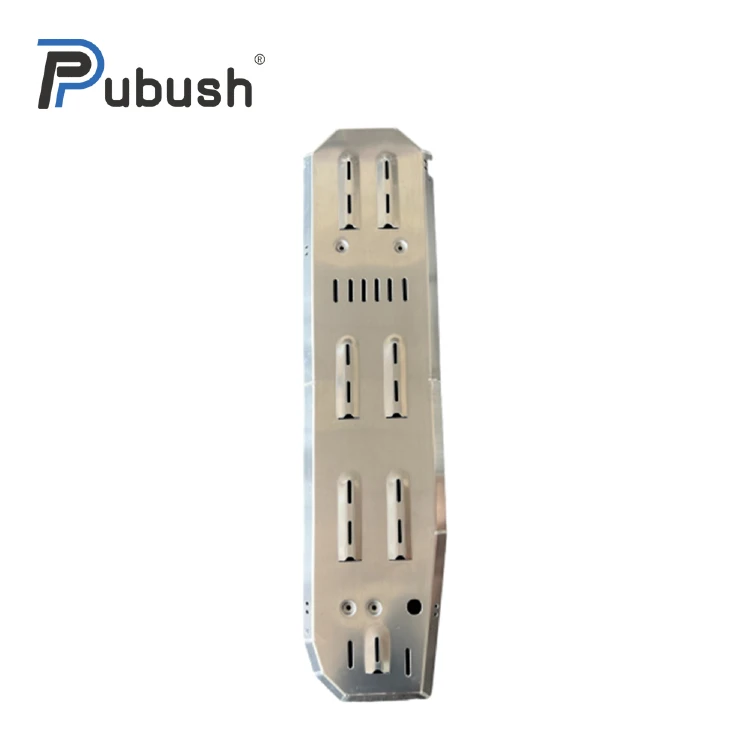
Common materials for chassis armor include rubber, resin, aluminum alloy, iron, plastic composites, and titanium alloys. Rubber offers good rust prevention and noise reduction; resin has a long service life, and chassis armor made from it is strong and wear-resistant. Aluminum alloy is used in some products due to its lightweight and high strength, reducing the overall weight of the vehicle, and also has good corrosion resistance. Iron chassis armor is a lower-cost option with good impact resistance and durability; plastic composites are typically composed of a plastic matrix and reinforcing fibers, offering good impact resistance and corrosion resistance, are lightweight, and easy to install. Titanium alloy underbody protection plates are a high-priced material, possessing high strength and lightweight characteristics. Rubber-type underbody armor offers good heat insulation, sound insulation, noise reduction, and shock absorption, with strong adhesion and good elasticity; composite underbody armor has strong adhesion and good toughness.
The new generation of water-soluble rubber underbody armor utilizes a composite technology of high-molecular polymers and nano-level rubber particles. Its elastic recovery rate can withstand more than 5000 deformations without cracking in an environment of -40℃ to 120℃. Its adhesion and peel strength to the metal substrate reach 12N/cm², and its corrosion resistance has passed a 2000-hour neutral salt spray test without rust. The water-based material's VOC emissions are below 50g/L, complying with EU RoHS standards. The resin-based sound insulation coating, through its microporous sound-absorbing structure design, can attenuate low-frequency noise (50-200Hz) by 3-5 decibels. Its thickness of 2.5 mm provides sound insulation comparable to a 5 mm traditional asphalt coating, while reducing the overall vehicle weight by 3-5 kg.