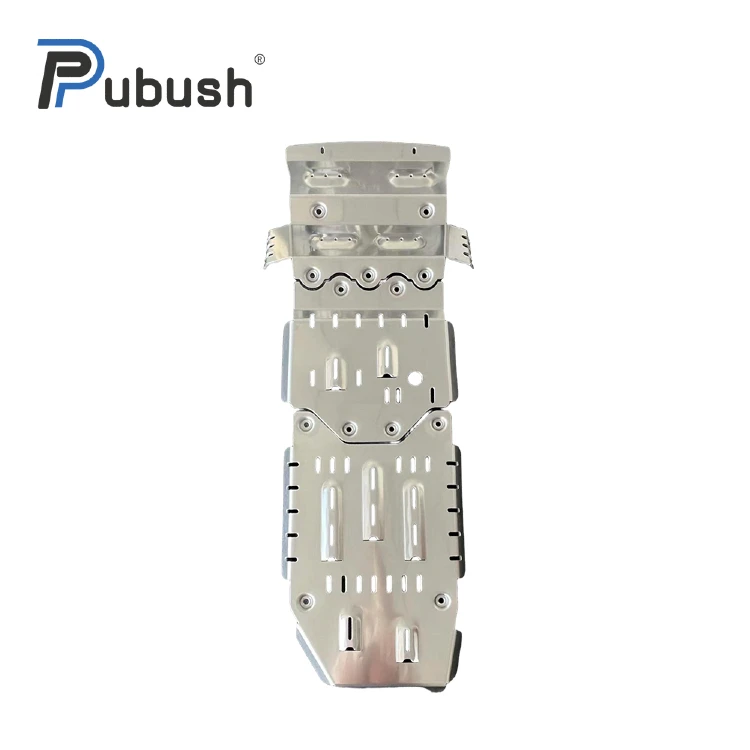
The main technical means of chassis protection include chassis sealing, chassis armor, regular cleaning and maintenance, and original or post-production galvanizing.
Chassis sealing is a relatively traditional rust prevention treatment. It involves spraying a highly adhesive, highly elastic, and highly corrosion-resistant rubber resin material onto the car chassis to form a protective film. Its application is relatively simple and low-cost, but its protective effect is relatively limited, with a lifespan of generally 2-3 years. Chassis armor is a more advanced protective technology. It uses special polymer materials to form a thicker, stronger protective layer with stronger adhesion, wear resistance, and corrosion resistance. Its lifespan can generally reach 5-10 years, and it also provides significant sound insulation and noise reduction.
Depending on the materials used, chassis armor can be mainly divided into rubber-based, resin-based, and composite types. Resin-based chassis armor is oil-based, with high hardness, good wear resistance, long protection time, and excellent waterproof, rustproof, and corrosion-proof effects, but it dries slowly. Rubber-based chassis armor is water-based, offering excellent heat insulation, sound insulation, noise reduction, and shock absorption. It has strong adhesion, good elasticity, and dries quickly. Composite chassis armor combines rubber and resin with other substances, resulting in even stronger adhesion, better toughness, and longer-lasting protection for the chassis.
Before application, the vehicle must be lifted, and the chassis thoroughly cleaned of dirt and oil using a high-pressure water gun and a specialized cleaning agent. The undercarriage should then be dried with an air gun. If rust is present, it must be polished to a metallic shine. The engine oil pan, transmission housing, exhaust pipe, brake system, sensors, and other areas not requiring coating must be tightly masked. The application environment should be a dust-free, well-ventilated area with a temperature of 15-30 degrees Celsius and humidity below 60%.
During spraying, a specialized spray gun should be used, maintaining a distance of 15-30 cm from the chassis surface and moving at a constant speed. The application should proceed from the inside out and from top to bottom. Typically, multiple thin coats are applied, 2-3 coats, with a certain time interval between each coat. For impact-prone areas such as chassis edges, apply a thicker coat, ensuring complete coverage of corners and other details. The total thickness of the undercoating is generally between 2-4 mm.
After spraying, allow the undercoating to air dry for 24-48 hours, avoiding vehicle driving or contact with water during this period. Complete curing typically takes time; drive on smooth roads for two to three days after application to ensure the coating's stability. Inspection is necessary after application; touch up any missed areas or uneven coating.